Are you looking for CNA jobs in Kenya after completing your healthcare training? A Certified Nursing Assistant (CNA) qualification can help prepare you for patient support and healthcare assistance roles in hospitals, homecare services, rehabilitation facilities and other care settings, depending on your training and the employer’s requirements.
As healthcare needs vary across hospitals, private homes and long-term care facilities, employers recruit people for different support roles. Some advertise positions as Certified Nursing Assistant, while others use titles such as Nursing Assistant, Healthcare Assistant, Patient Attendant, Care Assistant or Caregiver. Understanding these job titles can help you discover more opportunities when searching for work.
This guide explains where to find CNA vacancies in Kenya, the duties you may perform, the qualifications employers commonly request and how to prepare a strong job application.
What Are CNA Jobs in Kenya?
CNA jobs in Kenya generally refer to patient-care support positions in which trained workers help patients with everyday care needs while working within their assigned responsibilities and under appropriate supervision.
A nursing assistant may help patients with personal hygiene, feeding, mobility, positioning and general comfort. Depending on the role, the worker may also record observations, assist with routine patient-care activities and report changes in a patient’s condition to a nurse or other authorised healthcare professional.
The precise duties depend on the employer, the job description and the worker’s training.
For jobseekers, the most important step is to understand how employers describe their vacancies. Searching only for “CNA jobs” may overlook suitable positions advertised under other healthcare support titles.
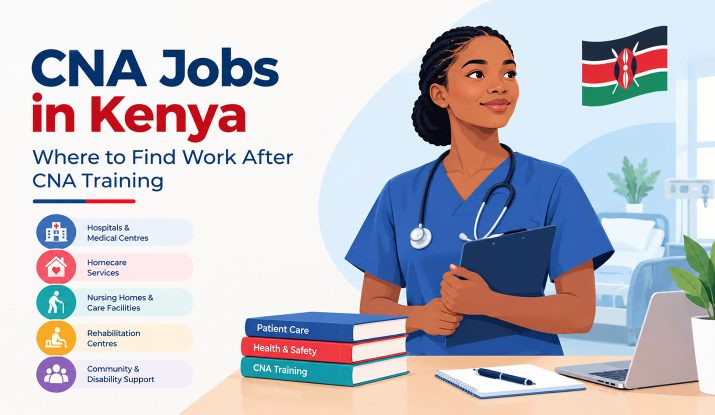
Where Can You Find CNA Jobs in Kenya?
1. Private Hospitals and Medical Centres
Private hospitals and medical centres are potential employers for qualified nursing assistants and healthcare support staff. Depending on the facility’s staffing structure, vacancies may involve assisting nurses with routine patient care, supporting patient movement, maintaining patient comfort and helping with everyday ward activities.
When looking for CNA vacancies in Kenya, visit the careers pages of hospitals and check their official recruitment announcements. You can also monitor reputable Kenyan job platforms for vacancies advertised by private healthcare facilities.
Read each advert carefully because hospitals do not all use the same job titles or qualifications. Some positions may require previous hospital experience, while others may accept candidates with relevant entry-level training.
2. Homecare and Home Nursing Agencies
Homecare services offer another potential career path for people with appropriate caregiving or nursing assistant training. These services support clients who need assistance at home because of age, disability, recovery from illness or difficulty performing everyday activities independently.
Depending on the assignment, a caregiver or nursing assistant may assist with bathing, dressing, meals, safe mobility, companionship and routine observations. Some roles involve post-operative support or working with clients who have more complex needs, so employers may specify additional experience or qualifications.
Search for homecare agencies recruiting caregivers, nursing assistants or healthcare assistants. Before accepting a position, confirm the duties, working hours, location, remuneration and reporting arrangements. You should also establish whether the role involves personal care, clinical tasks or both.
3. Nursing Homes and Long-Term Care Facilities
Long-term care facilities and residential care homes may employ staff to support older adults and other people who need ongoing assistance with daily activities.
Potential responsibilities include helping residents maintain personal hygiene, supporting safe movement, assisting with meals and observing changes in comfort or general wellbeing. Patience, respect for privacy and the ability to communicate clearly are particularly important in these environments.
Although vacancies may not always use the CNA title, related searches such as “nursing assistant jobs in Kenya,” “elderly care jobs” and “caregiver vacancies” can help you identify relevant opportunities.
4. Rehabilitation Centres and Recovery Facilities
Rehabilitation centres and facilities supporting recovery from illness, injury or surgery may need trained staff to assist clients with everyday care and mobility.
The responsibilities vary according to the facility and the needs of its clients. A support worker might help clients move safely, maintain personal hygiene, follow an established daily routine and communicate concerns to the appropriate healthcare professional.
Candidates should apply only for duties that match their qualifications and competence. Roles involving specialised rehabilitation or clinical procedures may require additional professional training.
5. Community-Based and Disability Support Services
Some organisations provide support to people living with disabilities or individuals who need assistance to remain safe and independent in their homes and communities.
Depending on the position, responsibilities may include personal care, mobility assistance, companionship, support with daily routines and communication with family members or care coordinators.
These opportunities may be advertised as care assistant, disability support worker, personal care assistant or home-based care worker positions. The qualifications required depend on the employer and the services provided.
6. International Healthcare Support Opportunities
Some CNA-trained candidates may consider healthcare support opportunities outside Kenya. However, the title “Certified Nursing Assistant” does not have identical requirements in every country.
An employer abroad may require a particular qualification, credential evaluation, language proficiency, work experience, background checks, a work permit or registration under the destination country’s rules. Some countries may require candidates to complete additional training before practising in a particular role.
Before paying an overseas recruitment agency or accepting an offer, verify the employer, the job contract, the applicable immigration requirements and the legitimacy of the recruitment process.
CNA Jobs in Kenya: Qualifications and Requirements
The qualifications for CNA jobs in Kenya depend on the employer and the responsibilities of the position. Some healthcare support vacancies accept a certificate in nursing assistance, caregiving or healthcare assistance from a recognised training institution. Other employers may require additional experience, a different qualification or professional registration.
For example, a recent Kenyan Certified Nurse Assistant vacancy advertised by Ciala Hospital in Kisumu requested a certificate in nursing assistance or equivalent recognised training. The advert also emphasised communication skills, reliability, patient-centred care and the ability to work shifts. This illustrates why candidates should review individual job descriptions rather than assume every employer has identical requirements.
Practical experience can also strengthen an application. Clinical attachment, supervised practical training, caregiving experience or relevant work in a healthcare environment may help demonstrate that you understand patient safety and professional conduct.
Employers may also look for knowledge of infection prevention, personal hygiene, safe patient handling, confidentiality and communication with patients and healthcare teams. First aid or Basic Life Support training may be useful where relevant to the position, but it does not replace any qualification or licence specifically required by an employer.
What Are the Duties of a Certified Nursing Assistant?
The duties of a Certified Nursing Assistant depend on the workplace and the scope of the position. In a hospital or residential care setting, the work may focus on supporting patients with activities of daily living and helping the healthcare team maintain a safe and comfortable environment.
Typical duties may include assisting with bathing and dressing, helping patients eat when appropriate, supporting safe movement and repositioning, maintaining cleanliness around the patient and communicating observations to the responsible healthcare professional.
Some positions may include recording routine observations or assisting with patient transfers and other basic care activities, provided the worker has the required training and authorisation. Accurate communication is essential because changes in a patient’s condition may need prompt assessment by a qualified professional.
A nursing assistant must also respect patient dignity, protect confidential information, follow infection prevention procedures and work within the limits of their competence. These responsibilities are important whether the job is in a hospital, a care home or a private residence.
How Much Do CNA Jobs in Kenya Pay?
The salary for CNA jobs in Kenya varies depending on the employer, location, level of experience, qualifications, shift arrangements and responsibilities. A hospital-based nursing assistant, a homecare worker and a caregiver working with a private client may receive different compensation packages.
There is no single salary that applies to every CNA position in Kenya. Some employers publish the expected salary in their vacancy announcements, while others disclose it during recruitment. Rather than relying on an unverified national average, compare current adverts for similar roles and locations.
When evaluating an offer, ask whether the stated amount is monthly or based on shifts, whether night or weekend work is expected, and whether transport, accommodation, meals or other benefits are included. For homecare positions, clarify whether payment is based on hours, days, overnight assignments or a monthly arrangement.
It is also important to distinguish advertised salary from take-home pay and to review the employment terms before accepting an offer.
How to Find CNA Vacancies in Kenya
An effective job search starts with using several relevant search terms. Search for “CNA jobs in Kenya,” “Certified Nursing Assistant vacancies,” “nursing assistant jobs,” “healthcare assistant jobs,” “patient attendant jobs” and “caregiver jobs.” This broader approach can reveal vacancies that would be missed by searching for CNA alone.
Next, check hospital career pages, homecare agency websites, reputable job platforms and verified employer announcements. You can also follow healthcare organisations on professional networking platforms, where some employers share recruitment notices.
Review new listings regularly and prioritise opportunities for which you meet the stated requirements. Note the application deadline, location, experience requirements, requested documents and official submission method. Avoid spending time applying for roles that require a professional licence you do not hold.
Useful starting points include the Careers page at CARED4, which describes homecare and nursing assistant roles, and reputable Kenyan job websites that publish healthcare vacancies. For any advertised opportunity, confirm that the vacancy is still open on the employer’s official website or through a verified contact before applying.
How to Apply for CNA Jobs in Kenya
A well-prepared application can help an employer understand your training, practical skills and suitability for a patient-care role.
Start with a clear CV that includes your relevant qualification, training institution, practical attachment and any previous healthcare or caregiving experience. Include skills that match the vacancy, such as safe patient handling, infection prevention, personal care, communication and maintaining patient confidentiality, but list only skills you genuinely possess.
Your application letter or email should briefly explain the position you are applying for, your relevant training and why you are suitable for the role. Address the requirements in the vacancy instead of sending the same generic message to every employer.
Attach the requested certificates, identification documents or references only as instructed by the verified employer. If you have practical attachment experience, describe the setting and the responsibilities you performed under supervision. Be honest about your experience and the limits of your training.
Before submitting your application, check the spelling of the employer’s name, the job title and the recipient’s email address. Use the requested email subject and submit your documents before the deadline. Keep a record of the applications you send so you can follow up professionally when appropriate.
How to Improve Your Chances of Getting a CNA Job
Completing a course is an important first step, but employers also look for reliability, professional conduct and the ability to provide respectful care. Candidates can improve their readiness by taking practical training seriously and developing communication, teamwork and problem-solving skills.
If you are newly qualified, consider relevant entry-level vacancies and supervised roles that match your training. Practical attachment can provide experience to discuss in interviews, while additional training in first aid, Basic Life Support or infection prevention may be beneficial when relevant to the employer’s requirements.
Prepare for interview questions about patient dignity, confidentiality, infection control, safe movement and what you would do if you noticed a change in a patient’s condition. Your answers should demonstrate that you understand when to report concerns and why you must not perform tasks outside your training or authority.
It is also useful to tailor your CV to each vacancy. If an employer prioritises homecare experience, highlight relevant personal-care and communication skills. If a hospital is recruiting ward support staff, emphasie your practical training and understanding of patient safety.
Most importantly, continue checking for vacancies and apply consistently to suitable positions. Employment outcomes depend on the available openings, employer requirements, competition and your individual qualifications and experience.
Avoid CNA Job Scams in Kenya
Jobseekers should be cautious of advertisements promising guaranteed employment in exchange for large upfront payments. A genuine recruitment process should clearly identify the employer, the position, the selection process and the relevant employment terms.
Verify vacancies through the employer’s official website or contact details obtained independently. Be careful with recruiters who refuse to identify the employer, pressure you to pay immediately or promise overseas employment without explaining the necessary documentation and immigration process.
Do not send money simply because someone claims to guarantee a hospital job or an overseas placement. Verify the recruitment agency and the applicable authorisations before proceeding. Never provide sensitive personal or financial information to an unverified recruiter.
For overseas positions, request a written contract and confirm the job, salary, working conditions, visa requirements and any recruitment charges before making a commitment.
Is CNA Training Worth It for Jobseekers in Kenya?
CNA training may be worth considering if you want to develop practical patient-care skills and pursue healthcare support work. The training can provide a foundation for roles involving personal care, patient mobility, hygiene, communication and support for people who need assistance with everyday activities.
However, the value of a course depends on its quality, practical exposure, the relevance of the qualification to employers and the requirements of your intended career path. Before enrolling, investigate the training institution, course content, certification, practical placement arrangements and the types of jobs for which graduates may be eligible.
Do not choose a course solely because an institution advertises guaranteed jobs or international placements. Ask for clear information about its qualification, practical training and any employment partnerships, and independently verify claims that are important to your decision.
If you are comparing healthcare training options, you may also want to explore related programmes such as caregiving, Healthcare Assistant and Health Support Services. These qualifications may lead to overlapping but not identical opportunities, so choose based on the role you intend to pursue.
Start Your Healthcare Career with Paula Training Institute
If you are planning to pursue CNA jobs in Kenya, choosing appropriate training is an important step towards preparing for patient-care support work. Paula Training Institute (PTI) offers healthcare training options designed to help learners build practical knowledge and skills for their professional development.
Before enrolling in a CNA-related or healthcare support programme, ask about the course content, entry requirements, duration, certification, practical training and how the qualification aligns with the roles you want to pursue.
A training course can help you prepare, but employment depends on your qualifications, experience, available vacancies and the requirements of individual employers. Make informed decisions about your training and use verified job advertisements to guide your applications.
Conclusion
CNA jobs in Kenya can offer a potential pathway into patient-care support for people with relevant training and the qualifications required by employers. Opportunities may be advertised by hospitals, homecare agencies, residential care facilities and rehabilitation centres under a variety of job titles.
To improve your chances, complete appropriate training, develop practical skills, prepare a targeted CV and monitor verified vacancies consistently. Check the specific qualifications and professional requirements for every position, and be cautious of recruiters promising guaranteed employment for a fee.
If you are planning to enter the healthcare support field, start by researching suitable training options and understanding what employers expect. With realistic career planning, relevant preparation and a careful job search, you can take informed steps towards your healthcare career.