
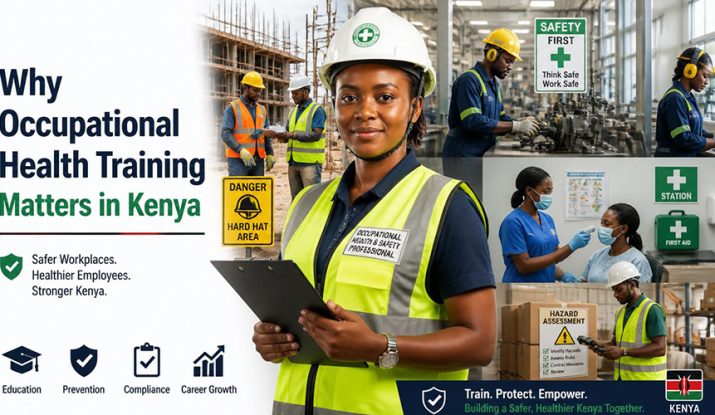
As Kenya’s economy continues to grow, industries such as construction, manufacturing, healthcare, transportation, agriculture, and energy are employing thousands of workers across the country. While this growth creates employment opportunities, it also increases the need for safe and healthy working environments. This is where occupational health training becomes increasingly important.
Understanding why occupational health training matters in Kenya is essential for employers, employees, and students seeking careers in workplace safety and health management. Occupational health training equips individuals with the knowledge and skills needed to identify workplace hazards, prevent accidents, promote employee well-being, and ensure compliance with safety regulations.
In today’s competitive work environment, organizations are increasingly recognizing that employee safety is not just a legal requirement but also a critical component of productivity, efficiency, and business success.
Why Occupational Health Training Matters in Kenya for Workplace Safety
One of the primary reasons occupational health training matters in Kenya is its role in creating safer workplaces. Every year, workers across various industries face risks such as slips and falls, machinery accidents, exposure to hazardous substances, fire hazards, and ergonomic injuries.
Occupational health training helps workers and supervisors identify potential dangers before accidents occur. Through proper safety education, employees learn how to use protective equipment correctly, follow safety procedures, and respond effectively during emergencies.
A well-trained workforce significantly reduces workplace injuries, illnesses, and accidents. This not only protects employees but also helps organizations avoid costly disruptions, compensation claims, and legal issues.
Improving Employee Health and Productivity
Another reason occupational health training matters in Kenya is its positive impact on employee health and productivity. Healthy employees are more motivated, focused, and efficient in their daily responsibilities.
Occupational health training teaches organizations how to promote wellness programs, prevent work-related illnesses, manage workplace stress, and maintain safe working conditions. When employees feel safe and valued, they are more likely to perform at their best and contribute positively to organizational goals.
By investing in occupational health training, companies can reduce absenteeism, improve staff morale, and enhance overall workplace performance.
Career Opportunities in Occupational Health
As workplace safety becomes a growing priority, demand for trained occupational health professionals continues to increase. This is another reason why occupational health training matters in Kenya for students and job seekers.
Individuals with occupational health training can find opportunities in various sectors, including construction companies, manufacturing plants, hospitals, government agencies, logistics firms, educational institutions, and corporate organizations.
Possible career paths include occupational health assistant, workplace safety officer, health and safety coordinator, compliance officer, risk management assistant, and occupational health consultant. With experience and additional certifications, professionals can advance into senior safety management positions.
The increasing focus on workplace safety regulations means that qualified occupational health professionals are likely to remain in demand for years to come.
Occupational Health Training and Legal Compliance
Kenyan employers have a responsibility to provide safe working environments for their employees. Occupational health training helps organizations understand and comply with workplace safety regulations and industry standards.
Through proper training, businesses can implement safety policies, conduct risk assessments, maintain safety records, and ensure that employees understand workplace safety procedures. Compliance not only protects workers but also strengthens an organization’s reputation and reduces the likelihood of regulatory penalties.
As workplace regulations continue to evolve, trained occupational health professionals play an important role in helping organizations remain compliant and competitive.
Where to Study Occupational Health in Kenya
Choosing the right institution is essential for gaining practical skills and industry-relevant knowledge. Students should look for a training institution that combines theoretical learning with practical applications, experienced instructors, and career-focused support.
Paula Training Institute (PTI) offers occupational health training designed to equip students and workers with the skills needed to promote workplace safety and contribute to healthier work environments. Through practical instruction and industry-focused learning, students gain knowledge that can be applied across multiple sectors.
A quality training institution helps students develop confidence, competence, and employability in the growing occupational health field.
Why Occupational Health Is a Growing Field in Kenya
With rapid industrialization, increased infrastructure development, and growing awareness of employee welfare, occupational health is becoming one of the most important areas of workforce management in Kenya.
Organizations are increasingly investing in safety programs to protect employees and improve operational efficiency. This trend continues to create opportunities for trained professionals who understand workplace health, risk management, and safety compliance.
For students seeking a meaningful and impactful career, occupational health offers the opportunity to make workplaces safer while building a stable and rewarding professional future.
Conclusion
Understanding why occupational health training matters in Kenya is essential in today’s evolving workplace environment. Occupational health training helps prevent accidents, improve employee well-being, increase productivity, and ensure legal compliance across various industries.
Whether you are an employer seeking to create a safer workplace or a student exploring a career in workplace safety, occupational health training provides valuable knowledge and practical skills that can make a lasting difference.