Learning a second language from an early age can give children an opportunity to develop communication skills, explore another culture and become more comfortable interacting with people from different backgrounds. In Nairobi, Mandarin Chinese is becoming an increasingly popular language for parents looking for an additional learning opportunity for their children.
But what age should a child start learning Chinese? Is Mandarin difficult for young learners? What exactly happens in a children’s Chinese class, and how can parents choose the right programme?
If you are considering Chinese classes for children in Nairobi, this guide explains the ideal starting age, the potential benefits of learning Mandarin, what children can expect during lessons and what parents should consider when choosing a programme.
What Are Chinese Classes for Children in Nairobi?
Chinese classes for children in Nairobi are language programmes designed to introduce young learners to Mandarin Chinese through lessons and activities suited to their age and level.
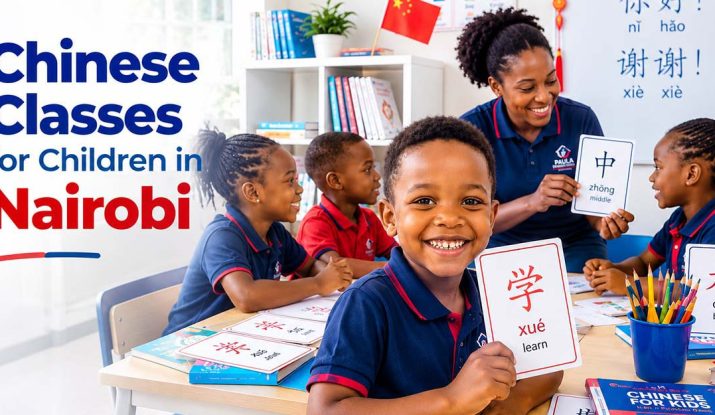
Unlike adult language courses, children’s Mandarin programmes generally need to be engaging, interactive and appropriate for the child’s stage of development. Young learners may be introduced to Mandarin through simple vocabulary, pronunciation activities, songs, games, pictures, stories, conversations and other classroom activities.
The exact approach differs between training institutions. Some programmes focus mainly on speaking and listening, while others gradually introduce Pinyin, Chinese characters, reading and writing.
What Age Should Children Start Learning Chinese?
There is no single age at which every child should begin learning Mandarin. Children develop at different rates, and the best starting point depends on their age, attention span, interests and learning environment.
Many children’s language programmes begin during the preschool years. For example Paula Training Institute offers a Chinese language programme for children aged 4 and above.
Starting at around four years old can give children plenty of time to become familiar with the sounds and rhythm of Mandarin. At this age, learning should feel more like an engaging educational activity than a traditional academic class.
Older children can also begin successfully. A child who starts Mandarin at eight, ten or twelve years old can still develop strong language skills when lessons are structured appropriately and the learner receives regular opportunities to practise.
Therefore, parents should focus less on finding a “perfect” age and more on finding a programme that matches the child’s developmental stage.
Benefits of Chinese Classes for Children in Nairobi
Learning Mandarin can provide children with more than the ability to say a few Chinese words. A well-structured programme can expose learners to a different language system and culture while encouraging regular listening, speaking, reading and writing practice.
- Early Exposure to a Second Language
Young children can benefit from regular exposure to another language because they have many years to practise and gradually build their vocabulary.
Starting Mandarin early allows children to become familiar with its pronunciation and tones before progressing to more complex language structures. Instead of trying to learn everything at once, children can gradually build their skills over several years.
The goal should not be to make a young child fluent immediately. At the beginning, developing curiosity, confidence and familiarity with the language can be just as important.
- Improved Listening and Pronunciation Skills
Mandarin pronunciation is different from English and Kiswahili, particularly because Mandarin uses tones to distinguish meaning.
For young learners, practising these sounds repeatedly can help them become more comfortable with Mandarin pronunciation. Children’s classes can introduce tones through repetition, songs, games and simple conversations rather than relying entirely on written exercises.
- Greater Cultural Awareness
Learning a language also introduces children to aspects of the culture associated with it.
Chinese classes may expose children to Chinese greetings, traditions, celebrations, stories, food, numbers, characters and everyday expressions. This can encourage children to become curious about cultures beyond their immediate environment.
For a child growing up in Nairobi’s multicultural environment, exposure to another language can complement their existing experience of interacting with people from different cultural backgrounds.
- Increased Confidence in Communication
Children need opportunities to use a language, not simply memorise vocabulary.
Interactive Mandarin lessons can give learners a safe environment where they practise introducing themselves, answering simple questions, naming objects and having basic conversations.
As children become more familiar with the language, successfully using a new word or sentence can also encourage them to participate more actively in class.
- A Foundation for Future Learning
Starting Chinese at a young age can give children more time to progress through different stages of language learning.
A child who begins with simple vocabulary and pronunciation can gradually move towards reading, writing, conversation and more advanced Mandarin. Some programmes also prepare learners for recognised Chinese language assessments such as the Youth Chinese Test (YCT).
What Do Children Learn in Chinese Classes?
The content of a children’s Mandarin course depends on the age group and level. However, beginner classes generally introduce children to basic vocabulary and communication before gradually increasing the difficulty.
Younger children may start with greetings, numbers, colours, family members, animals, food, toys and simple everyday expressions. Lessons can combine spoken Mandarin with pictures, songs, games and other activities that help children remember new words.
As children progress, they may begin learning Pinyin, which helps learners understand Mandarin pronunciation, as well as basic Chinese characters.
Older or more advanced learners may work on sentence formation, reading, writing, listening comprehension and conversations.
Some children’s Mandarin programmes deliberately use games, storytelling, pictures, songs and multimedia to maintain children’s interest.
What to Expect from Chinese Classes for Children in Nairobi
Parents should expect children’s Mandarin classes to look different from adult language lessons.
A good children’s class should take the learner’s age and attention span into account. Younger children are unlikely to benefit from long periods of grammar explanation. Instead, lessons can introduce language through repetition, movement, pictures, conversation and interactive activities.
At the beginning, children may learn simple expressions such as greetings and introductions. They may also practise numbers, colours, family vocabulary and other words related to their everyday lives.
As their confidence increases, lessons can gradually introduce more vocabulary and longer sentences.
The learning environment also matters. A classroom that feels welcoming and encouraging can make children more willing to participate and practise speaking.
How Long Does It Take for a Child to Learn Mandarin?
There is no fixed period in which every child will learn Mandarin. Progress depends on age, lesson frequency, previous language experience, motivation and how much the child practises outside class.
A child attending one lesson a week will generally have a different learning pace from a child receiving several hours of Mandarin exposure every week.
Consistency is therefore more important than trying to rush through a course. Regular exposure gives children more opportunities to hear Mandarin, practise pronunciation and remember vocabulary.
Parents can support this process by encouraging simple Mandarin practice at home. Listening to age-appropriate Chinese songs, reviewing vocabulary from class or using simple greetings during everyday activities can reinforce classroom learning.
How to Choose Chinese Classes for Children in Nairobi
Choosing the right programme involves looking at more than the course name. Parents should consider the child’s age, the teaching approach, class size, lesson schedule and the experience of the instructors.
It is also useful to ask whether the programme separates children according to age or ability. A four-year-old and a twelve-year-old are likely to require very different teaching methods.
The curriculum should also be clear. Parents should know whether the programme focuses on speaking and listening, introduces reading and writing, teaches Pinyin and Chinese characters, or prepares children for a recognised proficiency assessment.
Practical and interactive learning is another important consideration. A children’s Mandarin programme should give learners opportunities to actually use the language rather than simply copy vocabulary from a textbook.
Parents should also ask about the location, timetable, fees, learning materials and progression from one level to another before registering their child.
Why Interactive Learning Matters for Children
Children generally learn differently from adults. They need opportunities to participate rather than simply listen to a teacher for an extended period.
Interactive learning can involve games, songs, pictures, role-play, storytelling, flashcards, simple conversations and age-appropriate activities.
These activities can help turn unfamiliar Mandarin vocabulary into something children can associate with actions, objects and experiences.
The aim is to create an environment where children are encouraged to try speaking Mandarin without being afraid of making mistakes. As their exposure increases, they can gradually become more comfortable using new vocabulary and sentence structures.
Chinese Classes for Children in Nairobi: In-Person or Online?
Parents now have several options when looking for Mandarin training. Some programmes are delivered in physical classrooms, while others are available online.
In-person classes can give children direct interaction with teachers and other learners. This may be particularly useful for younger children who benefit from face-to-face activities and group participation.
Online classes can provide greater flexibility, especially for families with busy schedules or those who live far from a training centre.
Some language institutions offer both options.
The best format depends on the child’s age, learning style, availability and the quality of the programme.
Chinese Classes for Children at Paula Training Institute
Parents looking for Chinese classes for children in Nairobi can also consider programmes specifically designed for young learners.
Paula Training Institute currently offers Chinese language training for children aged 4 years and above. The children’s programme introduces young learners to Mandarin through age-appropriate and interactive lessons, with an emphasis on basic vocabulary, pronunciation, listening and speaking.
The programme is designed to give children an early introduction to Mandarin in a supportive learning environment while helping them develop confidence using another language.
Parents interested in enrolling their children should confirm the latest class schedule, fees, age grouping and available intake directly with the institution before registration.
Start Your Child’s Mandarin Learning Journey
Introducing a child to Mandarin can be an exciting educational experience. With age-appropriate teaching, regular practice and an encouraging learning environment, children can gradually develop pronunciation, vocabulary, listening and speaking skills while discovering a new language and culture.
If you are searching for Chinese classes for children in Nairobi, start by considering your child’s age, learning goals and preferred class format. Look for a programme that makes learning interactive, provides opportunities for communication and offers a clear pathway for continued progress.
For parents interested in starting early, children’s Mandarin programmes from age four can provide an opportunity to introduce the language in a fun and supportive environment. Paula Training Institute currently offers Chinese language classes for children aged four and above in Nairobi.
The earlier goal should be to build interest and confidence, not to pressure children to master the language immediately. With consistent exposure and positive encouragement, Mandarin can become a valuable part of a child’s broader educational journey.