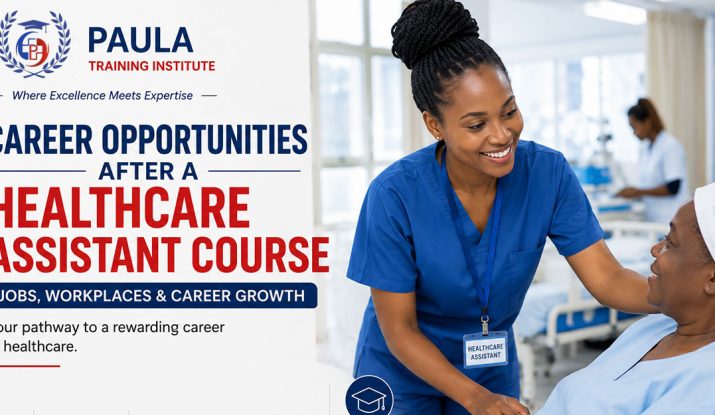
Choosing a healthcare course is an important decision, particularly for students who want a practical career that allows them to make a direct difference in people’s lives. A Healthcare Assistant Course can provide an entry point into the healthcare sector by equipping learners with practical patient-care, communication, safety, and healthcare support skills.
But what happens after completing the course?
Many prospective students ask about the career opportunities after a Healthcare Assistant Course, where graduates can work, what responsibilities they may have, and whether the qualification can provide a pathway to further career development.
The good news is that Healthcare Assistants can work in several healthcare and care environments. Their skills are relevant wherever patients, elderly people, people recovering from illness or injury, and individuals requiring assistance with daily care need professional support.
This guide explores the main Healthcare Assistant jobs in Kenya, potential workplaces, career progression opportunities, and factors to consider when planning your career after training.
What Does a Healthcare Assistant Do?
Before looking at career opportunities, it is important to understand the role of a Healthcare Assistant.
Healthcare Assistants (HCA) provide essential support to patients and healthcare teams. Depending on their workplace, responsibilities may include assisting patients with daily activities, supporting personal hygiene, helping with mobility, observing and reporting changes in a patient’s condition, assisting with nutrition, maintaining a safe and clean care environment, and providing emotional and social support.
Healthcare Assistants generally work as part of a wider healthcare team and may operate under the supervision or direction of qualified healthcare professionals. Their exact duties depend on their employer, training, workplace policies, and scope of practice.
This makes the role particularly important in environments where patients require regular assistance and close attention.
Career Opportunities After a Healthcare Assistant Course
The healthcare sector offers several potential employment settings for Healthcare Assistant graduates. Your actual opportunities will depend on your qualifications, practical experience, employer requirements, and any additional training you complete.
1. Hospitals and Medical Facilities
Hospitals are among the most obvious potential workplaces for Healthcare Assistants.
Healthcare Assistants may support patients and healthcare teams in areas where non-clinical and basic patient-care assistance is required. Their work can involve helping patients move safely, supporting personal care, preparing care areas, assisting with basic observations where permitted by their training and employer, and ensuring patients receive appropriate support.
Working in a hospital can also expose new graduates to different areas of healthcare and allow them to gain valuable experience working alongside nurses and other healthcare professionals.
For graduates who eventually want to pursue additional healthcare qualifications, this type of experience can provide useful exposure to professional healthcare environments.
2. Homecare and Home-Based Care
Homecare is another important area of opportunity for Healthcare Assistants.
Some patients require assistance at home rather than in a hospital or residential facility. This may include elderly people, individuals recovering from illness or surgery, people living with disabilities, or patients who require ongoing assistance with everyday activities.
A Healthcare Assistant working in homecare may support personal care, mobility, nutrition, medication reminders where permitted, companionship, basic observations within their scope, and other activities specified by the care plan.
Homecare requires more than technical knowledge. Healthcare Assistants must also demonstrate patience, reliability, communication skills, respect for privacy, and the ability to work professionally within a patient’s home environment.
3. Rehabilitation Centres
Rehabilitation centres provide another potential career setting.
Patients recovering from injuries, surgery, illness, or other conditions may require assistance with daily activities while undergoing rehabilitation. Healthcare Assistants can support these individuals with mobility, personal care, comfort, and routine activities according to the instructions of the healthcare team.
Working in rehabilitation can be particularly rewarding because Healthcare Assistants may see patients gradually regain independence and confidence.
4. Nursing and Residential Care Facilities
Residential care facilities and nursing homes require staff who can provide consistent support to people who need assistance with everyday activities.
Healthcare Assistants may help residents with bathing, dressing, feeding, mobility, personal hygiene, social interaction, and other aspects of daily living. They may also observe residents and report relevant changes to the appropriate healthcare professionals.
This area can be particularly suitable for people who enjoy building long-term relationships with the individuals they care for.
5. Elderly Care
As the need for quality elderly care increases, there are opportunities for trained care professionals to support older adults in residential and home-based environments.
Healthcare Assistants working with elderly people need strong communication and interpersonal skills because care often involves understanding individual preferences, routines, mobility needs, and emotional wellbeing.
Providing quality elderly care requires patience and compassion as much as technical ability. A good Healthcare Assistant helps patients maintain dignity and independence while ensuring their safety.
6. Private Clinics and Healthcare Centres

Private clinics and medical centres may also employ healthcare support personnel depending on their staffing requirements.
The responsibilities of a Healthcare Assistant in a clinic can vary considerably. Some positions may focus on patient reception and preparation, basic care support, maintaining patient areas, assisting healthcare professionals, or other duties permitted by the employer and the individual’s training.
For new graduates, private healthcare facilities can provide an opportunity to gain practical experience and develop professional confidence.
7. Hospices and Palliative Care Settings
Hospices and other organizations providing palliative or supportive care may require trained care personnel to assist patients and families.
This can be emotionally demanding work, but it is also an area where compassionate Healthcare Assistants can make a significant difference.
Healthcare Assistants may provide comfort and personal-care support while working as part of a multidisciplinary team. Strong communication, empathy, respect, and professionalism are particularly important in this environment.
8. Community and Non-Governmental Organizations
Some NGOs and community-based organizations operate healthcare, disability, elderly-care, maternal-health, rehabilitation, or community-support programs.
Depending on the organization’s activities and recruitment requirements, Healthcare Assistants may find opportunities to contribute to community-based healthcare initiatives.
These roles can expose graduates to healthcare delivery outside traditional hospitals and help them understand the importance of accessible healthcare within communities.
Healthcare Assistant Jobs in Kenya: What Employers Look For
Completing a Healthcare Assistant Course is an important first step, but employers generally look for more than a certificate.
Healthcare is a people-centred profession, so communication, compassion, reliability, teamwork, professionalism, and respect for patients are extremely important.
Practical experience can also strengthen your employability. Clinical attachment, supervised practical training, volunteering, internships, and relevant work experience can help graduates demonstrate that they can apply what they learned in the classroom.
Employers may also value additional certifications and skills relevant to the position, such as first aid, Basic Life Support, infection prevention and control, patient safety, communication, and other healthcare-related competencies.
Your ability to work as part of a team is equally important. Healthcare Assistants regularly interact with nurses, doctors, therapists, patients, relatives, administrators, and other professionals.
Healthcare Assistant Career Progression
One of the biggest advantages of starting with a Healthcare Assistant Course is that it does not necessarily have to be the end of your healthcare education.
After gaining experience, some Healthcare Assistants choose to pursue additional qualifications that allow them to specialize or move into other healthcare careers.
For example, a graduate may decide to pursue further training in nursing, community health, phlebotomy, emergency care, or another healthcare-related field, depending on their academic qualifications and the admission requirements of the institution they choose.
This creates a potential progression pathway in which the Healthcare Assistant qualification becomes the foundation for continued professional development.
However, students should understand that additional qualifications have their own entry requirements and professional regulations. Completing a Healthcare Assistant Course does not automatically qualify someone to practise as a nurse, clinical officer, laboratory professional, or another regulated healthcare professional.
Healthcare Assistant Salary in Kenya
Salary is naturally an important consideration when choosing a healthcare career.
The income of a Healthcare Assistant in Kenya can vary significantly depending on the employer, location, level of experience, responsibilities, type of facility, and employment arrangement. Private facilities, homecare agencies, residential care providers, and other employers may have different pay structures.
For this reason, it is better to evaluate salary alongside other factors such as employment benefits, opportunities for experience, career progression, working environment, and opportunities for further training.
Graduates should also be cautious about websites that promise a fixed salary for every Healthcare Assistant. Actual earnings can differ substantially between employers.
Is a Healthcare Assistant Course a Good Career Choice in Kenya?
For someone who enjoys helping people and wants to enter the healthcare sector through practical training, Healthcare Assistant can be a worthwhile career option.
The role combines patient interaction, practical care, teamwork, and professional responsibility. It can also provide exposure to healthcare environments that may help graduates make more informed decisions about future specialization.
However, students should choose the course because it matches their interests and career goals rather than simply because they expect guaranteed employment.
Healthcare is a demanding profession. Successful Healthcare Assistants need patience, emotional maturity, attention to detail, good communication, and a genuine commitment to patient wellbeing.
How to Improve Your Career Opportunities After a Healthcare Assistant Course
Your career development does not stop when you receive your certificate.
One of the best ways to improve your employability is to continue developing practical skills. First aid and Basic Life Support training can strengthen your emergency-response knowledge, while additional healthcare courses can broaden your professional skill set.
Practical experience is equally valuable. Look for legitimate opportunities to gain supervised experience and learn from qualified healthcare professionals. Keep your CV updated and clearly describe your practical training, clinical exposure, certifications, and relevant skills.
Communication should also be a major focus. Healthcare employers need people who can communicate respectfully with patients and work effectively with other members of the healthcare team.
For those interested in international opportunities, language training may also be worth considering. For example, learning German can be useful for qualified healthcare professionals exploring specific opportunities in German-speaking countries, although overseas employment involves additional professional, qualification-recognition, language, immigration, and employer requirements.
Why Study a Healthcare Assistant Course at Paula Training Institute?
Paula Training Institute provides healthcare training designed to equip students with practical knowledge and skills for professional healthcare environments.
The institute’s approach combines theoretical learning with practical training, allowing students to develop an understanding of patient care, healthcare professionalism, safety, communication, and other skills relevant to healthcare support roles.
For students considering a Healthcare Assistant Course in Kenya, choosing an institution that provides practical exposure and prepares learners for real workplace situations is important.
PTI also offers other healthcare-related training programs, giving students opportunities to explore additional areas of healthcare education as they develop their career goals.
Prospective students should contact the institute directly for the current Healthcare Assistant course entry requirements, duration, fees, intake dates, and curriculum details.
Start Your Healthcare Career with the Right Training
The career opportunities after a Healthcare Assistant Course extend beyond a single workplace. Graduates can potentially build careers in hospitals, clinics, homecare, rehabilitation, elderly care, residential facilities, hospices, and community healthcare settings.
More importantly, Healthcare Assistant training can provide a foundation for continued professional development. With practical experience, additional certifications, and further education, graduates can continue expanding their skills and exploring new areas of healthcare.
If you are considering a Healthcare Assistant Course in Kenya, Paula Training Institute can help you understand the available training pathway, admission requirements, course structure, and opportunities for further healthcare education.
Start your healthcare journey with Paula Training Institute and develop the practical skills you need to build a rewarding career in healthcare.
1 Comment
How to Become a Healthcare Assistant in Kenya: Course, Requirements & Career Guide - Paula Training Institute
[…] completing their training, Healthcare Assistants can explore opportunities in different healthcare and care […]