The healthcare industry in Kenya continues to create exciting opportunities for individuals interested in patient care and laboratory services. One of the most accessible and rewarding healthcare careers is phlebotomy. As medical facilities increasingly rely on laboratory testing for diagnosis and treatment, the demand for skilled phlebotomists continues to grow.
If you are wondering how to become a phlebotomist in Kenya, this guide will walk you through the qualifications, training process, essential skills, and career opportunities available in this important healthcare profession.
What Does a Phlebotomist Do?
Before understanding how to become a phlebotomist in Kenya, it is important to know what the role involves. A phlebotomist is a healthcare professional trained to collect blood samples from patients for medical testing, blood donations, transfusions, and research purposes.
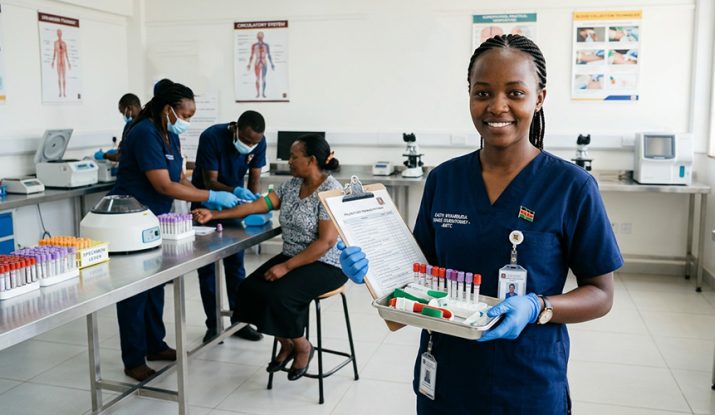
Phlebotomists work closely with laboratory technicians, doctors, nurses, and other healthcare professionals to ensure specimens are collected safely and accurately. Their responsibilities include identifying patients, preparing collection equipment, drawing blood, labeling specimens correctly, maintaining hygiene standards, and ensuring patient comfort throughout the procedure.
Because laboratory results play a crucial role in medical decision-making, phlebotomists are an essential part of the healthcare system.
Step 1: Meet the Entry Requirements
The first step in learning how to become a phlebotomist in Kenya is meeting the minimum admission requirements for training.
Most institutions offering phlebotomy training require applicants to possess a KCSE certificate or its equivalent. While specific requirements may vary between colleges, students with an interest in healthcare, strong communication skills, and attention to detail are often well-suited for the course.
Since phlebotomy involves direct interaction with patients, professionalism and a caring attitude are also valuable qualities for success in this field.
Step 2: Enroll in a Phlebotomy Course
After meeting the entry requirements, the next step is enrolling in a recognized Phlebotomy Course in Kenya.
The training program equips students with the theoretical knowledge and practical skills needed to perform blood collection procedures safely and effectively. During the course, students learn topics such as anatomy and physiology, infection prevention and control, specimen handling, patient care, laboratory safety, and blood collection techniques.
Many training institutions also include practical sessions that allow students to gain hands-on experience before entering the workforce.
Step 3: Complete Practical Training
Practical experience is one of the most important aspects of becoming a competent phlebotomist. During training, students are exposed to real-world healthcare environments where they learn how to interact with patients and perform blood collection procedures under supervision.
Clinical exposure helps students develop confidence, accuracy, and professionalism. It also provides valuable experience that employers often look for when hiring healthcare support staff.
The combination of classroom learning and practical training ensures graduates are prepared for the demands of modern healthcare settings.
Step 4: Develop Essential Phlebotomy Skills
Understanding how to become a phlebotomist in Kenya goes beyond completing a course. Successful phlebotomists possess several important skills that contribute to effective patient care and specimen collection.
Attention to detail is essential because incorrectly labeled samples can affect laboratory results. Communication skills help phlebotomists reassure patients and explain procedures clearly. Good hand-eye coordination, patience, professionalism, and infection control awareness are also critical for success.
Employers value phlebotomists who can work efficiently while maintaining high standards of patient safety and comfort.
Career Opportunities for Phlebotomists in Kenya
One of the advantages of becoming a phlebotomist is the variety of employment opportunities available after training.
Qualified phlebotomists can work in hospitals, medical laboratories, diagnostic centers, blood donation centers, research institutions, private clinics, and public healthcare facilities. As healthcare services continue to expand, the need for trained specimen collection professionals remains strong.
Many graduates use phlebotomy as a foundation for advancing into broader healthcare and laboratory careers through additional training and certifications.
Where to Study Phlebotomy in Kenya
Choosing the right institution is a crucial part of how to become a phlebotomist in Kenya. A quality training institution should offer practical learning opportunities, experienced instructors, modern training facilities, and career-focused support.
Paula Training Institute (PTI) offers healthcare training designed to equip students with practical skills and industry-relevant knowledge. Through hands-on instruction and professional guidance, students gain the confidence needed to work effectively in healthcare settings.
When selecting a college, it is important to consider factors such as practical training opportunities, student support services, and links with healthcare facilities for clinical exposure.
Is Phlebotomy a Good Career in Kenya?
Phlebotomy is an excellent career choice for individuals looking to enter the healthcare industry without spending many years in training. The course offers practical skills, relatively short study periods, and strong employment prospects.
As demand for diagnostic testing continues to grow, healthcare facilities require skilled professionals who can collect and handle specimens accurately. This makes phlebotomy a valuable and marketable healthcare profession.
For students seeking a rewarding career that combines patient interaction with medical practice, phlebotomy offers an attractive pathway into the healthcare field.
Conclusion
If you are wondering how to become a phlebotomist in Kenya, the process begins with meeting the entry requirements, enrolling in a quality training program, gaining practical experience, and developing essential patient care skills.
With growing demand in hospitals, laboratories, and healthcare facilities, phlebotomy remains one of the most accessible and rewarding healthcare careers available today. By choosing the right training institution and committing to professional growth, you can build a successful future in this important medical field.
Ready to start your healthcare career? Enroll today and take the first step toward becoming a professional phlebotomist and building a rewarding healthcare career.