If you are considering a career in healthcare but want a course that can get you into the workforce quickly, phlebotomy is an excellent option. As hospitals, laboratories, and diagnostic centers continue to expand across Kenya, the demand for trained phlebotomists is steadily increasing.
One of the most common questions prospective students ask is: What is the duration of a Phlebotomy Course in Kenya? Understanding the length of training can help you plan your education and career path more effectively.
In this guide, we explain how long it takes to complete a phlebotomy course, what students learn during training, and the career opportunities available after graduation.
What Is a Phlebotomy Course?
Before discussing the Phlebotomy Course Duration in Kenya, it is important to understand what the course involves.
Phlebotomy is a specialized healthcare field that focuses on drawing blood samples from patients for laboratory testing, blood donations, research, and medical diagnosis. Phlebotomists play a critical role in healthcare by ensuring specimens are collected safely, accurately, and professionally.
The course combines theoretical knowledge with practical training to equip students with the skills required to work in healthcare facilities.
Phlebotomy Course Duration in Kenya
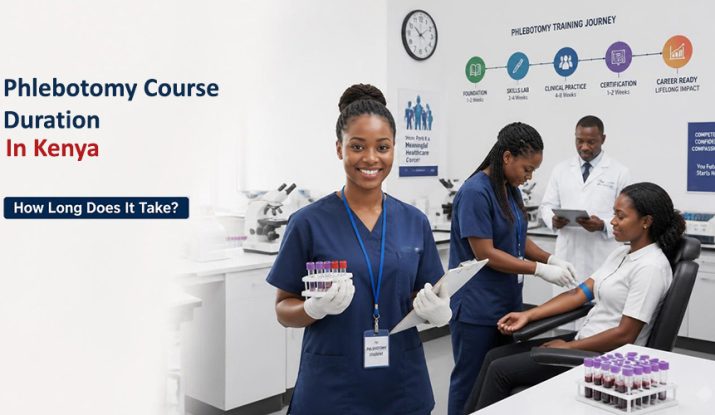
The Phlebotomy Course Duration in Kenya varies depending on the institution and the training structure offered. In most colleges, phlebotomy is considered a short medical course and can typically be completed within three to six months.
The program is designed to provide students with both classroom instruction and hands-on practical experience. During this period, students learn blood collection techniques, infection prevention and control, specimen handling, patient communication, laboratory safety, and professional ethics.
Because the course is relatively short compared to many healthcare programs, it is ideal for students who want to gain marketable medical skills and enter the healthcare industry within a short period.
What Will You Learn During the Course?
Although the Phlebotomy Course Duration in Kenya is relatively short, students acquire a wide range of valuable healthcare skills.
The training covers blood collection techniques, infection prevention and control, laboratory safety procedures, specimen handling, basic anatomy and physiology, and professional patient care.
Practical sessions form a significant part of the training, ensuring graduates are confident and competent when working with patients and healthcare teams.
Factors That Affect Course Duration
The duration of a phlebotomy course in Kenya can vary depending on several factors.
These include the institution offering the course, whether the program is full-time or part-time, the availability of practical training sessions, and the number of clinical attachment hours required.
Some colleges may offer intensive programs that take a shorter time to complete, while others may extend the duration to provide students with more hands-on practical experience.
Therefore, it is always advisable to confirm the exact course duration with your chosen institution before enrolling.
Why Choose a Short Medical Course Like Phlebotomy?
One of the biggest advantages of the Phlebotomy Course is the ability to qualify and start working quickly.
Unlike some healthcare programs that take several years to complete, phlebotomy allows students to gain practical healthcare skills within a short period. This makes it an attractive option for school leavers, career changers, and anyone looking to enter the medical field efficiently.
Additionally, the course provides a strong foundation for those who may wish to pursue further studies in laboratory sciences, nursing, or other healthcare disciplines.
Career Opportunities After Completing a Phlebotomy Course
Completing a phlebotomy course opens the door to various employment opportunities within the healthcare sector.
Graduates can work in hospitals, medical laboratories, diagnostic centers, blood donation centers, private clinics, and research institutions, where they are responsible for collecting and handling blood specimens for testing and diagnosis.
As healthcare services continue to expand in Kenya, the demand for trained phlebotomists remains strong. The course also provides a solid foundation for individuals who wish to advance their careers through further studies in laboratory sciences, nursing, and other healthcare-related fields.
Where to Study Phlebotomy in Kenya
Choosing the right institution is essential for acquiring practical skills and improving employability. Students should look for colleges that provide experienced trainers, practical laboratory exposure, and career-focused learning.
Paula Training Institute (PTI) offers healthcare training programs designed to equip students with industry-relevant knowledge and hands-on skills. Through practical instruction and supportive learning environments, students gain the confidence needed to succeed in healthcare careers.
Conclusion
The Phlebotomy Course Duration in Kenya is typically between three and six months, making it one of the most accessible and practical healthcare courses available today. Despite its short duration, the course provides valuable medical skills that can lead to rewarding career opportunities in hospitals, laboratories, clinics, and other healthcare facilities.
If you are looking for a fast-track pathway into the healthcare sector, phlebotomy is a smart and marketable choice.